Showing posts with label writers. Show all posts

Wednesday, August 14, 2019

5+ Creative Ideas to Celebrate Your ‘Sweet 18’

Everything that we do in our life has to bring its benefits - when we do sports, we want to feel results in some time, when we work hard on a paper, we want it to be useful for readers, as well as when cooking we want the dish to bring joy to our family. Thus, organizing a birthday party, we have to make it as memorable as possible and bring much use and benefits.
Recently, I had to mull over all possible variants when planning my own ‘sweet 18’ :D 
You can’t even imagine how much time I spent to find the best option that will suit our 30+ party. And now, I want to present some interesting ideas that are definitely worth your attention.

1. Time Clubs

These are cozy cafes where you pay for the time spent. Here, you can bring your own food, drinks and other goods that you need to spend time with pleasure. The cafe, in their turn, will provide you with some tea, biscuits, sugar, and water. 
If you are one of those who do not mind some pizza with cola and want to spend time with guests talking about your life and sharing your experience, this place is just for you. 

2. Photo Studios

Do you want your friends to memorize your birthday for long? Celebrate it at a photo studio! Why not choose characters for all guests and organize a theme photo session? Or, you can mention the theme in the invitations and meet your guests ready for the party!
This is a really great idea if you are fed up with ordinal banquets and need some creative ideas as well as want the party to be memorable. 
Well, what can be more memorable than hundreds of funny photos with your friends costumed in different characters?
One more thing I’d like to advise - you can bring some vine or champaign with sweets to make the party more dynamic as well as not to let guests yawn when you are taking a picture with others ;)

3. Quest Rooms

Do you have some favorite TV shows, series, films, or even computer games? - Sure, you have! Today, you have a great opportunity to become a character of your favorite program.
Quest rooms are places organized for people to pass themed quizzes. There are lots of Game of Thrones rooms, Harry Potter quizzes, Ghost Busters, Black Mirror, and many other rooms that might be interesting to your friends.
Do NOT miss your chance to spend time enhancing your brain functions as well as bringing all the guests together. Remember, only together, you are power!

4. Master-Classes

Writers are creative people! So, what can be better than a party that will help develop this skill? 
Today, there are a lot of master-classes where you can learn lots of creative things.
  • Writing classes. If you are a newbie in the writing sphere, it would be really useful for you to visit a class where a professional writer will tell you how to work with writing, how to make it perfect as well as how to catch the readers and NOT to lose the interest in this activity.
  • Art classes. Well, when you are a writer and spend all your time writing, it is more likely that you want to target your creativeness at some other activities. Why not try art? Actually, creativeness is developing better if you insert it in different directions; creativeness does NOT like monotony - the more you create, the more this skill develops.
  • Decor classes. There is hardly a person who does not want to be good at decorating. Most celebrations and even most life situations need us to be able to decorate habitats. What do we do when Christmas, Easter, Thanksgiving Day, Halloween, and other holidays are coming? Well, and what we do when moving to a new house? Yeah, we decorate our habitats! Thus, why not visit a decor class? Again, if you are a creative person, this will help you develop new creative skills. Thus, do not neglect the opportunity to celebrate your birthday party at such a master-class. 

These are just a few ideas; search the web and find out what classes are coming soon nearby!

5. Board Game Cafes
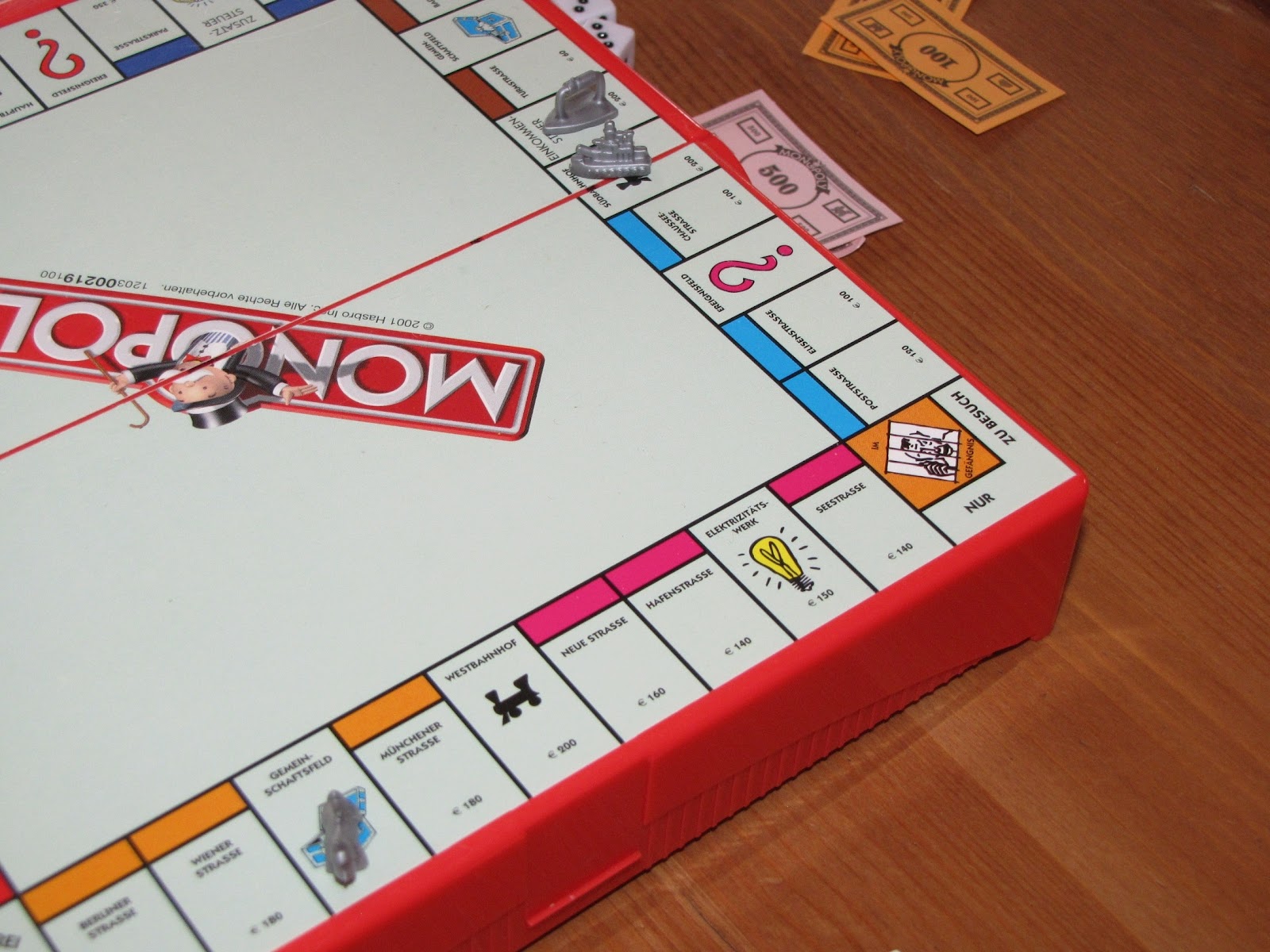
One more idea is board game cafes. Here, you are to spend time with friends playing board games. Usually, at these cafes, you can find board games that are popular these days. 
If you do not want to spend money on board games that cost a lot, you can visit these cafes and play with your friends. Google some games that could be interesting for your friends and make sure these games are presented at the cafe you are going to visit. 
This option will provide you with a great mood as well as the perfect time.
Use of one of these options, and your birthday party will become the most memorable event your friends have ever seen.

Friday, March 25, 2016

10 Freelance Academic Writing Fears More Frightening than Stephen King

You know that there are numerous phobias with weird names for almost every fear that a person can have: balonephobia (fear of needles and pins), cometophobia (obvious) or bibliophobia (fear of books; a kind of sacrilege, isn’t it?).


I haven’t found anything related to academic writing specifically but the closest disorder to it is atychiphobia or academic phobia – the fear of failure in learning. Well, I can’t say that I’m obsessed with the idea that I must excel at everything I learn, but I have some fears that have appeared as a result of my occupation. Let’s look into them more closely.

  1. I won’t make it until deadline.
  2. I will accidentally plagiarize something.
  3. My statement proofs are not convincing enough.
  4. My writing skills haven’t improved.
  5. The client won’t like the paper.
  6. I have missed a mistake!
  7. I am not qualified enough for that assignment.
  8. My language has degraded.
  9. I have missed an update in citation rules.
  10. All my writing has disappeared from my laptop.


I am sure that some freelance academic writers understand me and my fears. It is natural to be nervous when you are about to complete a serious task because some details may not be taken into account. There is always a risk …


On the one hand, I understand that these fears make me more thorough and diligent. On the other hand, they sometimes stop me from using, for instance, innovative data because it seems almost unreal and I think that the client may not accept that.


Confidence play an important role in academic writing and it certainly needs to be developed but at the same time doubting your decisions can sometimes make your work better.  

Wednesday, January 13, 2016

Editing, Content Editing, Copyediting or What the Hell?

When you start typing in the search box “what is the difference between proofread …”, this is what you get:

And you just wanted to make sure that you understand what editing is. But don’t start panicking when you see so many things that other people do with their texts. Although you have thoughts like “OMG, my writing could have been better if I had revised, edited, copyedited, content-edited it before proofreading!”, I’m positive that you did everything abovementioned by just correcting mistakes and making sure that your essay or article looks decent. Believe me: the fact that you didn’t know how all the stages of writing are called (which will be fixed in a few moments) doesn’t make you a bad writer.

When I mentioned “all stages of writing”, I didn’t make a mistake because just spilling out all the words on the paper or into a Word doc is not enough; if you want to do a great job, you need to thoroughly go through your text before sending it to a client. And I’ll tell you how to call every step of this process so that you can structure all the actions in your head, have a chance to show off in front of your employer and can feel how good you are.

So let’s begin.

I know that there are numerous definitions and contradictions regarding differences between different stages of text processing, so I’ll depend on my own classification that I’ve embraced by searching the internet, trying everything in practice and selecting the best ones. Consequently, I’ll refer to editing, content editing, copyediting and proofreading.

·         Editing – you look at your writing from the distance, so to say. You foresee that the structure is right, the organization is logical and your text looks harmonious when you give a quick glance at it. Thus, I sometimes call this stage “above ground”.

·         Content Editing – you check that the content actually meets the requirements of the assignments, whether the facts that you mention are truthful and relevant and if there are any contradictions. Consistency is very important in your career, so be sure to watch it.

·         Copyediting – here is the stage that can be called “underground” because you have to eradicate all the spelling, grammar or stylistic mistakes from your text. I’m sure that you do it regularly but maybe now, knowing how it’s called, you can say to every mistake in your writing “YOU SHALL NOT PASS”.

·         Proofreading – finally the words that freelance academic writers meet so often: on this stage you correct all the tiny winy errors or inconsistencies that could pass your guard before and polish your essay to be perfect before sending it to the client.

And that’s all. Isn’t really that bad, is it? Well, here I have to additionally mention “revising” or “revision” which comprises editing, content editing and copyediting into one word. But I wouldn’t risk missing even one stage during text processing because when you have everything in a crowd in your head, you surely can lose something out.

I hope that this classification will help you deliver academic content of the best quality and you won’t have problems with editing or proofreading anymore.
Good luck, my friends.

Thursday, December 10, 2015

The Most Confusing Words for Me


Well, my 30 day challenge is finished and I’m back with my freelance academic writing tips. I want to say that my already rooted (don’t know how deeply yet) habit of writing every day is still with me and I’m not going to quit it.
Today’s post is written rather for my sake but I hope that it will help many of you because it’s a common problem for the English language. And it doesn’t matter whether you are a native or non-native speaker.

So, the most confusing words according Lily Wilson:

1.       Proceed vs Precede

I’ve started with the most problematic ones. No matter how many times I look them up in the dictionary, I’ll mix them when writing. So, “to proceed” means “to continue”; to go on while “to precede” is to come or happen before something. Pretty simple … for now, when I see these definitions on the screen.


2.       Discreet vs Discrete

I love English but such kind of words I sometimes want to call “the most awful” not “the most confusing”. “Discreet” stands for modest and “discrete” for “separate” or “clear-cut”. They just don’t stick to these definitions in my head no matter how I train them.

3.       Site vs Sight

Well, these ones are easier. I confuse them rarely but from time to time my hand can flinch and type not the right word. “Sight” implies “a view of something”;  “site” denotes “a place”. But, still, “sightseeing” often makes me give it a second thought because it associates with visiting places.


4.       Alternately vs Alternatively

Sometimes I mix up these words. It seldom happens but the fact that it does makes me feel insecure. “Alternately” means “in turns” while “alternatively” stand for “as another option”. Talking about other confusing words, I remember the difference due to the different pronunciation. But these two sound quite similar and I think that is the reason I have problems with them.

All in all, these are the most bugging words for me when I want to apply them in my writing. I always have some kind of consult-a-dictionary indicator which pops up in my mind every time I see these words.  So, dear friends, when you doubt something, it’s 100% better to check it up than to correct the mistake someone else has pointed at.
Stay cool!

Wednesday, October 28, 2015

Bored? Here Is a 30 Day Writing Challenge to Get You Stirred Up!

Dear friends!

Probably it’s just fall time that causes some mood swings and occasional unwillingness to work. Lots of my friends tell me every day that they are bored because they don’t have anything interesting happening right now or they feel drained of strength and can’t finish anything they’ve started. Don’t know about you, but I just can’t stand this feeling when you don’t know what is wrong but can’t get yourself to do things. It means that it’s time to take action! And from now on I declare a 30 day writing challenge!


I think that’s a great opportunity to shake up when you don’t feel like doing anything. It has various perks that will boost your productivity:

  •              you improve your skills by writing something every day;
  •              you send away your fall moodiness;
  •              you form a useful habit that you will surely benefit from.


Doesn’t it sound great? I bet it does. So, I will certainly accept this challenge and we’ll see the results after a month. I will do reports every 5 days to show my daily writing (and to control myself a little bit too). My 30 day writing challenge starts on November 1 and ends on November 30, 2015. I am very excited and encourage you to do the same. I’ve heard a lot of writers’ warm feedback on such kind of challenges and want to have some of my own.


So, who’s in with me?

Tuesday, August 25, 2015

What Is the Best Time to Write?

I've recently bumped into an article by +Tanya Golash-Boza in her blog Get a Life, PhD. Her article deals with productivity and shares some tips on when it is better to write and how often you should engage in this activity. From her personal experience, she says that she gets up before everybody's awake and devotes this time to writing because that's the time when she's the most productive. Moreover, she mentions a study that looked into 3 groups of writers. One of them was called “the forced writers” who were to write five days a week. The findings have shown that other writers, who had to produce texts only when they had inspiration to, wrote much less than the forced writers and had few creative ideas. So, the conclusion here is that daily writing is a really fruitful activity especially when you have a lot of deadlines.


I decided to try this method and scheduled to write for two hours from 7 a.m. till 9 a.m. five days a week. I have been following this plan for 4 weeks so far and I have to admit that the results are amazing and you’ll understand why. The timing was perfect because my husband was already at work and my kids were still sleeping (school holidays could not have come at a better time). I was able to arrange my writing space in an ultimate order, turn on my favorite music and plunge into words without being bothered.


As it appeared, I’m really much more productive in the morning because my previous experience of being awake at 2 a.m. and doing what is called “writing” ended up in multiple revisions and editions. But my morning endeavors have brought about lots of original texts with minimum changes afterwards. Isn’t that great?


But let’s move to the actual numbers. So, before my experiment, I wrote approximately 1-1.5 page a day (together with drafting, revising, editing, etc.). But at present, when I follow the schedule I produce 2-3 pages and sometimes even more! Apart from my planned writing sessions, from time to time, I return to my texts several times a day, just because I have inspiration.

Well, you can see it for yourself that the results are incredible, at least for me! It’s totally worth trying, even just because you must always try something new.

So, write and enjoy, my dear friends.

Thank you, +Tanya Golash-Boza for such valuable tips!

Thursday, August 6, 2015

Take Totes or Take Notes

Academic writing really differs from other kinds of writing and you know that if you are a freelance academic writer. Imagine that academic writing is your new roommate who shares some space with you. Before you start to get along, it takes you a great load of time to get used to each other, to learn the habits and choose the best strategy for effective communication. And it’s all the same with academic writing. Through tries and fails you gain the knowledge of techniques that suit you most and make you productive.


As always I’m eager to share my experience and tell you about one of the greatest strategies that I constantly use in academic writing: note-taking. Let’s take an essay as an example given that it’s the most common academic assignment and examine this technique in practice.
When you are to write an essay, say, on cruelty to animals, the first thing you do is research. While surfing different web pages you spot the most discussed points of this issue and note them:

-          - Cruelty to animals/animal abuse/animal neglect is …;
-          - Laws regarding animal cruelty;
-          - Approaches to the issue;
-          - State of affairs in different countries;
-          - Cecil the Lion.


So, I’ve chosen the most highlighted moments in this sphere and I’ve already got the structural plan for an essay. I start, as always, with introduction where I define the notion and its importance. Then, in the body of the essay I have 3 paragraphs with different directions of the same issue where I expand and, depending on the type of writing, give arguments or your opinion. The last step is the conclusion where I summarize all the above mentioned information and, as you’ve noticed, I’ve noted Cecil the Lion – the most discussed issue in the animal abuse news feed. It can be given as the finalizing example and intensify the impression from my essay with important facts and consistent information.


Now, let’s review what has happened here. While researching the topic I was taking notes because when I try to remember something I want to write about, it lives in my head for about 5 minutes. So, it’s better to write down. Well, apart from helping me to memorize the points that must be included in the essay, notes have also organized the structure of the future paper. Two birds with one shot.


Now you understand the true value of this technique?

Thursday, July 16, 2015

Harper Lee's New Book and a Stamp with Alice Munro


Last week happened to be very rich in literature events.  You know, I sometimes get very excited when I talk about books or authors. They are my real passion and I just don’t have enough strength to walk past any bookstore I come across (sometimes it gets even problematic cause I swear, I don’t know how I lose so much time there). Thus, as I’m a true reading geek, I just couldn’t miss the opportunity to share my impressions regarding literature news. There are two of them, in particular, that impressed me the most.

So, here we go.


A new book by Harper Lee “Go Set a Watchman” has been released on July 14th. I haven’t managed to buy it yet but I will certainly do! “To Kill the Mockingbird” is one of my favorite books and here comes the next one. It’s surely on the bestseller list on Amazon and I suppose it couldn’t be any other way. However, I’ve read the first chapter kindly published by The Guardian and I have very mixed feelings. That’s certainly not what I expected but I can’t evaluate without seeing the big picture. I definitely want to purchase the full version and then I’ll be able to settle on my opinion.
By the way, you can also listen to the first chapter of “Go Set a Watchman” read by Reese Witherspoon. Intriguing, isn’t it?


But that’s not all. Canada Post created a stamp with the image of Alice Munro, the first Nobel Prize winner in Literature from Canada. I think it’s a real honor and she totally deserves it. I love her short stories written in a simple style. They are so deep that you sometimes wonder how it is possible to fit this world in such a small number of words.


That’s quite impressive and I suppose gives some food for thought.  Well, I hope next week will bring me more joy in the form of literature events and I will definitely share with you.